

Backyard poultry keepers often notice that not all eggs look the same—some shells appear smooth and uniform, while others show speckles, spots, or even a powdery coating. These variations are usually harmless, but they can reveal interesting insights into a hen’s health, diet, and environment.
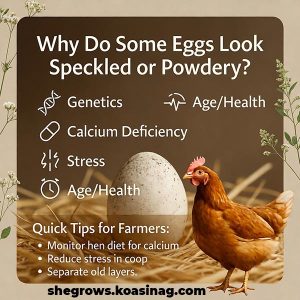
Main Causes of Speckled or Powdery Eggshells
- Genetics Some breeds naturally produce speckled eggs. The speckles are deposits of extra pigment applied unevenly during shell formation. This trait can be passed down and is not a sign of illness.
- Calcium Deposition Powdery or chalky spots often result from excess calcium being deposited on the shell. This can happen if hens consume too much calcium or if their shell gland temporarily misfires.
- Stress or Environmental Factors Sudden changes in temperature, handling, or flock stress can disrupt the shell-forming process, leading to speckles or rough patches.
- Age of the Hen Older hens sometimes lay eggs with irregular pigment distribution or weaker shells. Their shell glands don’t function as efficiently as younger hens’.
- Health Issues Respiratory infections (like infectious bronchitis) or nutritional imbalances can cause shell abnormalities, including speckling or powdery textures.
What It Means for Egg Quality
- Speckled eggs are generally safe to eat and often considered attractive.
- Powdery deposits are usually harmless but can indicate dietary imbalance if frequent.
- Consistent abnormalities may signal stress or illness in the flock, warranting closer observation.
Practical Tips for Poultry Keepers
- Balanced Diet: Ensure hens receive the right calcium-to-phosphorus ratio.
- Stress Reduction: Keep flock conditions stable—avoid overcrowding and sudden changes.
- Health Monitoring: Watch for respiratory symptoms or persistent shell issues.
- Breed Awareness: Recognize that some hens naturally lay speckled eggs, so not all variations are cause for concern.

