
🐄 Beginner’s Guide to Dairy Cows
Starting with dairy cows can feel overwhelming, but with the right foundation you’ll set yourself up for success. This guide covers the essentials: choosing breeds, housing, feeding, milking, and herd health.
🐮 Choosing the Right Breed
Selecting the right cow is the first step:
- Jersey – smaller, gentle, produces rich milk with high butterfat (great for cheese and butter).
- Friesian/Holstein – large, high-yield milk producers, ideal for commercial farms.
- Guernsey – medium-sized, balanced milk quality and quantity.
👉 For beginners, Jerseys or Guernseys are often easier to manage.
🏠 Housing & Environment
Your cows need comfort and cleanliness:
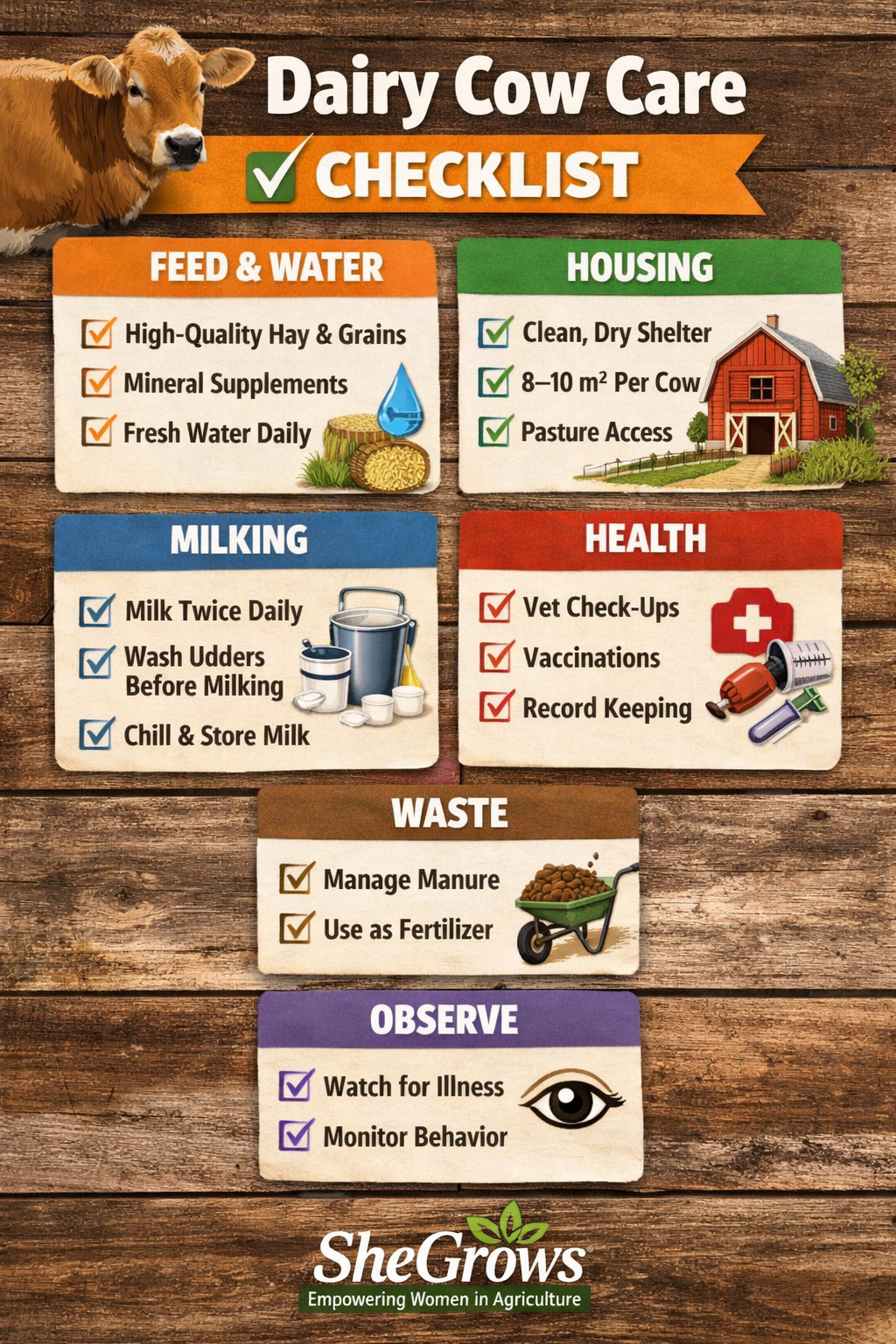
- Provide dry, well-ventilated shelters.
- Allow 8–10 m² per cow for space.
- Access to pasture grazing improves health and reduces feed costs.
- Ensure fresh water—a cow drinks 60–100 liters daily.
🌾 Feeding & Nutrition
A balanced diet is key:
- Hay: high-quality, at least 12% protein.
- Grains: corn, oats, or barley for energy.
- Supplements: minerals like calcium and phosphorus, plus salt licks.
- Pasture grazing: adds natural fiber and lowers costs.
🥛 Milking Practices
Consistency and hygiene matter:
- Routine: milk twice daily for best yield.
- Cleanliness: wash udders before milking.
- Equipment: hand milking works for small herds; machines save time as you grow.
- Storage: cool milk immediately—refrigeration is essential for sales.
🩺 Health & Management
Keep your herd strong:
- Schedule regular vet check-ups for mastitis, parasites, and reproduction.
- Maintain vaccination programs.
- Track milk yield, breeding cycles, and health records.
- Use manure as fertilizer or compost for added farm value.

