
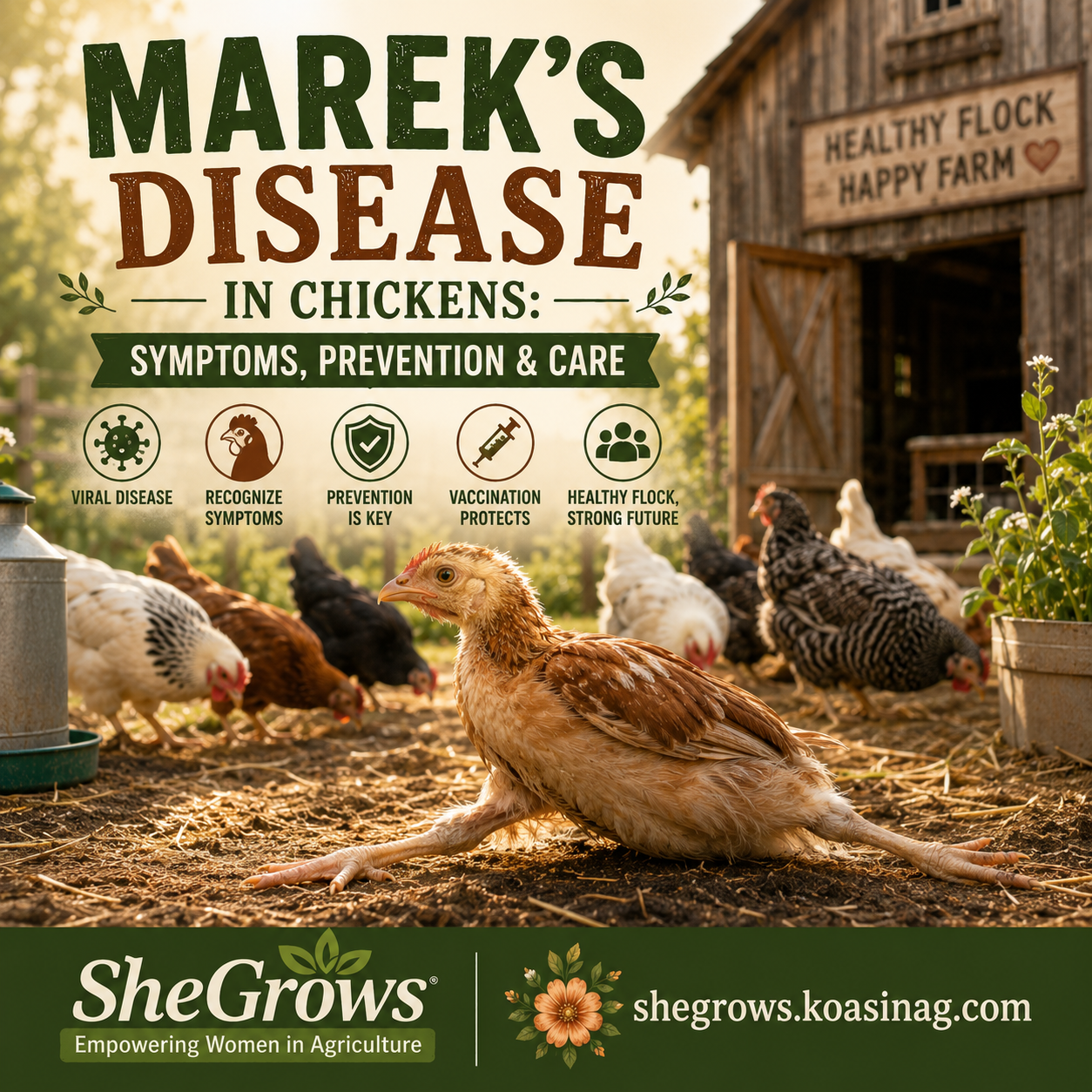
Marek’s Disease in Chickens: Everything Every Poultry Keeper Should Know
Marek’s disease is one of the most devastating viral diseases affecting chickens worldwide. It can strike backyard flocks, commercial farms, and exhibition birds alike, often causing paralysis, tumors, and sudden death in young chickens.
Unfortunately, there is no cure for Marek’s disease once a bird becomes infected. However, understanding how the disease spreads and taking preventative measures—especially vaccination—can dramatically reduce losses.
In this guide, we’ll explain what Marek’s disease is, how it spreads, common symptoms, diagnosis, prevention, and what to do if it appears in your flock.
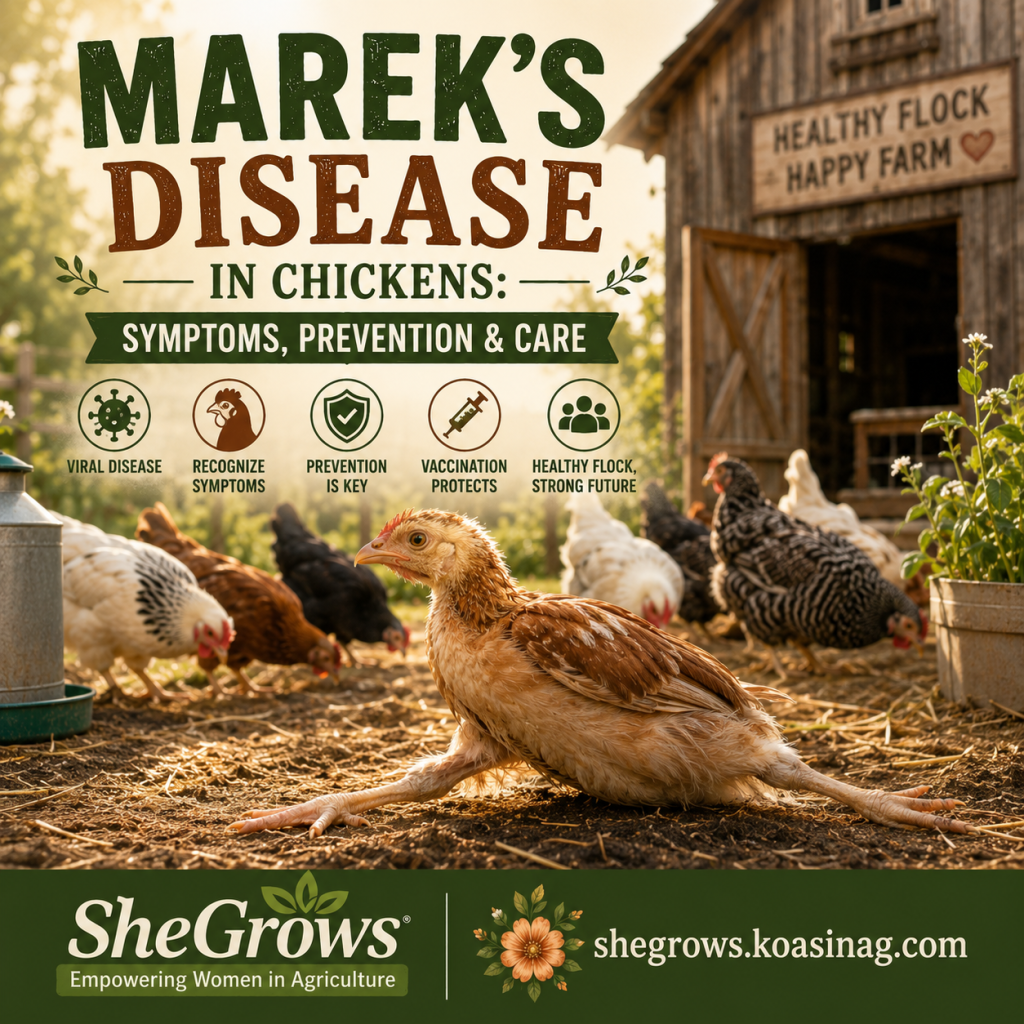
What Is Marek’s Disease?
Marek’s disease is a highly contagious viral disease caused by Gallid alphaherpesvirus 2 (GaHV-2), commonly known as the Marek’s disease virus (MDV).
The virus attacks:
- The nervous system
- Internal organs
- Skin
- Eyes
- Immune system
Depending on which organs are affected, chickens may develop paralysis, blindness, tumors, or sudden death.
Download your free infographic here:
https://shegrows.koasinag.com/wp-content/uploads/2026/07/SheGrows-Mareks-Disease-InfoGraphic.pdf
What Type of Disease Is Marek’s Disease?
Marek’s disease is classified as a:
- Viral disease
- Herpesvirus infection
- Contagious poultry disease
- Tumor-causing disease
Unlike bacterial diseases, antibiotics cannot treat Marek’s disease.
Which Chickens Are Most at Risk?
Marek’s disease most commonly affects:
- Chickens between 6 and 30 weeks of age
- Unvaccinated birds
- Heritage breeds
- Backyard flocks
- Exhibition birds
Adult chickens can become infected but are generally less likely to develop severe disease.
What Causes Marek’s Disease?
The virus spreads through microscopic particles found in feather dander.
Infected chickens shed the virus continuously from feather follicles, contaminating:
- Dust
- Bedding
- Coop surfaces
- Feeders
- Drinkers
- Nesting boxes
The virus is extremely hardy and can survive in poultry houses for months, even after infected birds have been removed.
Is Marek’s Disease Contagious?
Yes.
Marek’s disease is extremely contagious.
Healthy chickens become infected by breathing in contaminated dust and feather dander.
Unlike many poultry diseases, direct contact isn’t always necessary. Simply sharing the same environment can spread the virus.
Can Humans Catch Marek’s Disease?
No.
Marek’s disease cannot infect humans.
It is not considered a zoonotic disease and poses no risk to people handling infected birds.
Symptoms of Marek’s Disease
Symptoms vary depending on which organs are affected.
Nervous Form
One of the most recognizable signs is paralysis.
Affected chickens may show:
- One leg stretched forward
- One leg stretched backward
- Drooping wings
- Difficulty standing
- Loss of balance
- Paralysis
Eye Form (Ocular Marek’s)
Signs include:
- Grey or cloudy eyes
- Irregular pupil shape
- Blindness
- Poor vision
Tumor Form (Visceral Marek’s)
Internal tumors may develop in:
- Liver
- Heart
- Spleen
- Kidneys
- Lungs
- Ovaries
Birds may appear healthy before suddenly losing weight or dying.
Skin Form
Occasionally, tumors develop around feather follicles.
Small raised bumps may appear on the skin.
General Signs
- Weight loss
- Pale comb
- Weakness
- Depression
- Reduced appetite
- Poor growth
- Sudden death
How Is Marek’s Disease Diagnosed?
A veterinarian may diagnose Marek’s disease through:
- Physical examination
- Clinical history
- Post-mortem examination
- Laboratory testing (PCR or histopathology)
At necropsy, enlarged nerves and tumors in internal organs are common findings.
Diseases That Can Be Mistaken for Marek’s
Several diseases have similar symptoms, including:
- Lymphoid leukosis
- Botulism
- Newcastle disease
- Vitamin deficiencies
- Spinal injuries
- Heavy metal poisoning
Accurate diagnosis is important because management differs significantly.
Is There a Cure?
Unfortunately, there is no cure.
Once clinical signs appear, the virus cannot be eliminated.
Supportive care may help mildly affected birds remain comfortable for a time, but birds with paralysis or extensive tumors usually have a poor prognosis.
Can Marek’s Disease Be Treated?
There is no antiviral treatment available.
Supportive care may include:
- Easy access to food and water
- Soft bedding
- Reduced stress
- Isolation from bullying
- Good nutrition
However, supportive care does not eliminate the virus.
Birds that cannot eat, drink, or move comfortably should be humanely euthanized to prevent suffering.
Should Sick Birds Be Isolated?
Yes.
Although infected birds often begin shedding the virus before showing signs, isolating visibly sick birds can reduce environmental contamination and protect vulnerable birds.
What If Healthy Chickens Have Been Exposed?
Because Marek’s disease spreads before symptoms appear, exposure often occurs before the disease is recognized.
If healthy birds have been exposed:
1. Monitor the Entire Flock
Watch daily for:
- Limping
- Weakness
- Weight loss
- Paralysis
- Eye changes
- Poor appetite
2. Improve Biosecurity
- Clean housing regularly.
- Reduce dust buildup.
- Disinfect equipment.
- Limit visitors.
3. Reduce Stress
Stress weakens immunity.
Avoid:
- Overcrowding
- Sudden feed changes
- Mixing unfamiliar birds
- Poor ventilation
4. Avoid Introducing New Birds
Delay bringing new chickens into the flock until you’ve assessed the situation and consulted a veterinarian.
Vaccination Against Marek’s Disease
Vaccination is the best method of prevention.
Most commercial hatcheries vaccinate chicks on the day they hatch or even before hatch (in ovo).
Important points:
- Vaccines help prevent disease but do not completely prevent infection or virus shedding.
- Chicks should ideally be vaccinated before they are exposed to the virus.
- Vaccinated birds can still carry and spread Marek’s disease, but they are much less likely to develop tumors or paralysis.
How to Prevent Marek’s Disease
Good biosecurity is essential.
Buy Vaccinated Chicks
Whenever possible, purchase chicks from reputable hatcheries that vaccinate against Marek’s disease.
Quarantine New Birds
Isolate new chickens for at least 30 days before introducing them to your flock.
Keep the Coop Clean
Regularly remove:
- Feather dust
- Bedding
- Manure
Clean feeders and drinkers frequently.
Avoid Overcrowding
Proper space reduces stress and disease transmission.
Practice Good Biosecurity
- Change footwear before entering poultry areas.
- Wash hands after handling birds.
- Disinfect equipment.
- Limit unnecessary visitors.
Can Eggs from Chickens with Marek’s Disease Be Eaten?
Current evidence indicates that Marek’s disease is not transmitted through properly handled eggs to people. Eggs from otherwise healthy-looking hens are generally safe to eat if they are clean and thoroughly cooked.
However, eggs from severely ill birds or birds receiving medications for unrelated conditions should not be consumed unless your veterinarian advises otherwise.
Can Chickens Recover?
Some chickens with mild nerve damage may survive for extended periods.
However:
- Most birds with paralysis have a poor outlook.
- Birds with internal tumors usually deteriorate over time.
- Survivors remain infected for life and continue shedding the virus.
Download your free infographic here:
https://shegrows.koasinag.com/wp-content/uploads/2026/07/SheGrows-Mareks-Disease-InfoGraphic.pdf
Frequently Asked Questions
Can vaccinated chickens get Marek’s disease?
Yes. Vaccination greatly reduces the risk of developing disease but does not guarantee complete protection against infection.
How long does the virus survive?
The virus can survive in feather dust and the environment for many months, making thorough cleaning and biosecurity essential.
Should I disinfect my coop after a case of Marek’s?
Yes. While disinfection alone may not completely eliminate the virus because of its persistence in dust and dander, cleaning out organic material, reducing dust, and disinfecting surfaces are important parts of flock management.
Can other poultry get Marek’s disease?
Marek’s disease primarily affects chickens. Other poultry species are generally much less susceptible.
Final Thoughts
Marek’s disease remains one of the most significant viral threats to backyard and commercial chicken flocks. Because there is no cure, prevention is the most effective strategy. Purchasing vaccinated chicks, practicing strict biosecurity, reducing stress, and maintaining a clean environment can greatly lower the impact of this disease.
If you notice paralysis, unexplained weight loss, cloudy eyes, or sudden deaths in young chickens, contact a poultry veterinarian promptly. Early diagnosis can help you manage the disease, protect the rest of your flock, and make informed decisions about future breeding and biosecurity.

