
One of the simplest ways to keep track of your flock’s health is by paying attention to their droppings. Chickens don’t hide illness well, and their manure often tells the story before other symptoms appear. Knowing what’s normal—and what’s cause for concern—can help you act quickly and keep your hens thriving.
What Normal Droppings Look Like
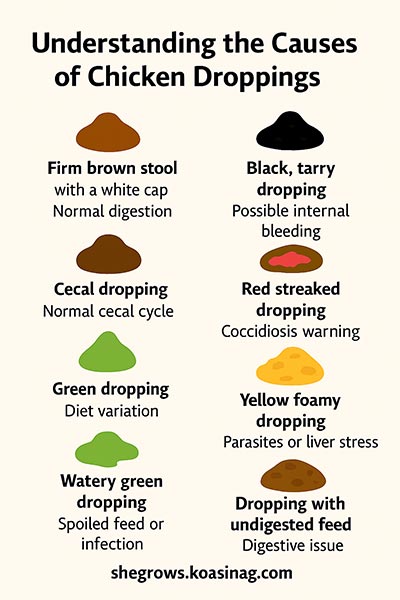
- Firm brown stool with a white cap The brown part is digested food, while the white cap is uric acid (the chicken’s way of excreting waste from the kidneys).
- Occasional cecal droppings These are looser, sometimes sticky, and can look like chocolate pudding. Cecal droppings happen every 8–10 stools and are perfectly normal.
- Variation with diet Greens, berries, or high-protein feed can change the color and texture. As long as hens are active and bright-eyed, this is nothing to worry about.
Droppings That Signal Trouble
- Black, tarry droppings May indicate digested blood from internal bleeding or coccidiosis. If persistent, it’s a red flag.
- Bright red streaks or clots Often linked to coccidiosis or intestinal irritation. Needs immediate attention.
- Watery or green droppings Can be caused by stress, heat, or spoiled feed. If prolonged, it may point to infection.
- Yellow foamy droppings Sometimes linked to parasites or liver issues.
- Undigested feed in droppings Suggests digestive problems or poor-quality feed.
Reading Droppings in Context
Droppings should always be interpreted alongside other signs:
- Healthy hen: Active, eating, bright comb, normal laying. Droppings may vary but usually return to normal.
- Unwell hen: Lethargy, pale comb, weight loss, or reduced laying combined with abnormal droppings.
Practical Tips for Farmers
- Keep bedding clean so droppings are easy to observe.
- Provide plenty of fresh water, especially in hot weather, since dehydration can darken droppings.
- Watch for patterns: one odd dropping is rarely a problem, but repeated changes across the flock deserve attention.
- When in doubt, separate the sick bird and consult a vet.
👉 Droppings are like a daily health report from your hens. By learning to read them, you can catch problems early, prevent disease from spreading, and keep your flock strong.

