
When Your Hen Goes Broody: A Guide to Gently Discouraging Incubation
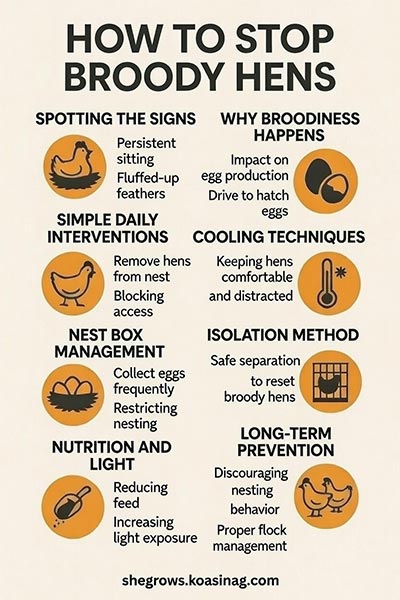
A broody hen is a marvel of nature, a feathered embodiment of maternal instinct ready to dedicate weeks to the creation of new life. However, for backyard chicken keepers who aren’t looking to expand their flock, a broody hen can present a delightful yet challenging situation. Her unwavering commitment to sitting on eggs, even if they’re unfertilized or non-existent, can lead to health issues for her and disrupt the rhythm of the coop. The good news is there are gentle, effective strategies to help your hen return to her regular routine without compromising her well-being.
Understanding the Broody Instinct
Broodiness is a hormonal state that triggers a hen’s innate desire to incubate eggs and raise chicks. While some breeds are more prone to broodiness (like Cochins, Silkies, Orpingtons, and Wyandottes), any hen can suddenly decide it’s time to be a mother. Environmental factors such as dark, secluded nesting boxes, or even just seeing a pile of eggs, can also trigger this instinct.
A broody hen is easy to spot. She will typically sit tightly in a nesting box, often flattened down, and may fluff her feathers out to appear larger. She might emit a distinctive “growl” or a sharp peck if you try to move her or collect eggs from underneath her. She’ll rarely leave the nest, eating and drinking very little, and will often pull feathers from her breast to line the nest and allow for better skin-to-egg contact for warmth.
This single-minded devotion, while admirable, can lead to problems if left unchecked.
Why Discourage Broodiness (When You Don’t Want Chicks)
While we appreciate a hen’s natural instincts, there are compelling reasons to discourage broodiness if you’re not planning for chicks:
- Health Risks for the Hen: A broody hen eats and drinks significantly less, leading to weight loss, dehydration, and a weakened immune system. Her body condition can deteriorate rapidly, making her susceptible to parasites and illness.
- Reduced Egg Production: A hen will stop laying eggs entirely while she is broody, as her body is focused on incubation. This means a temporary halt in your egg supply.
- Flock Disruption: A broody hen can become territorial and aggressive towards other hens trying to use the nesting boxes. She may also hog a popular nesting spot, causing other hens to lay eggs in less desirable locations.
- Pest Attraction: Eggs left undisturbed under a broody hen can attract pests like snakes or rodents, especially if any break.
- **Unwanted Chicks
Breaking the Broody Cycle: Practical Steps That Work
Once you’ve identified a broody hen, it’s time to gently interrupt the cycle. Here are proven strategies:
- Remove Nesting Temptations: Collect eggs frequently and block access to favorite nesting spots.
- Cool Her Down: Broodiness is partly driven by body heat. Move her to a cooler, well-lit area with no nesting material.
- Use a Broody Breaker Cage: A wire-bottom cage with good airflow discourages nesting behavior while keeping her safe.
- Increase Activity: Encourage foraging, dust bathing, and flock interaction to shift her focus.
- Adjust Feed and Light: Reduce high-calorie treats and increase daylight exposure to reset her hormonal cues.
These methods work best when applied consistently and with compassion. Some hens may take a few days to respond, while others may need a week or more.
Broodiness is a natural and admirable instinct—but when chicks aren’t part of your plan, it’s okay to redirect your hen with care. By understanding her behavior and responding with gentle, practical steps, you’re protecting her health and keeping your flock balanced.

