
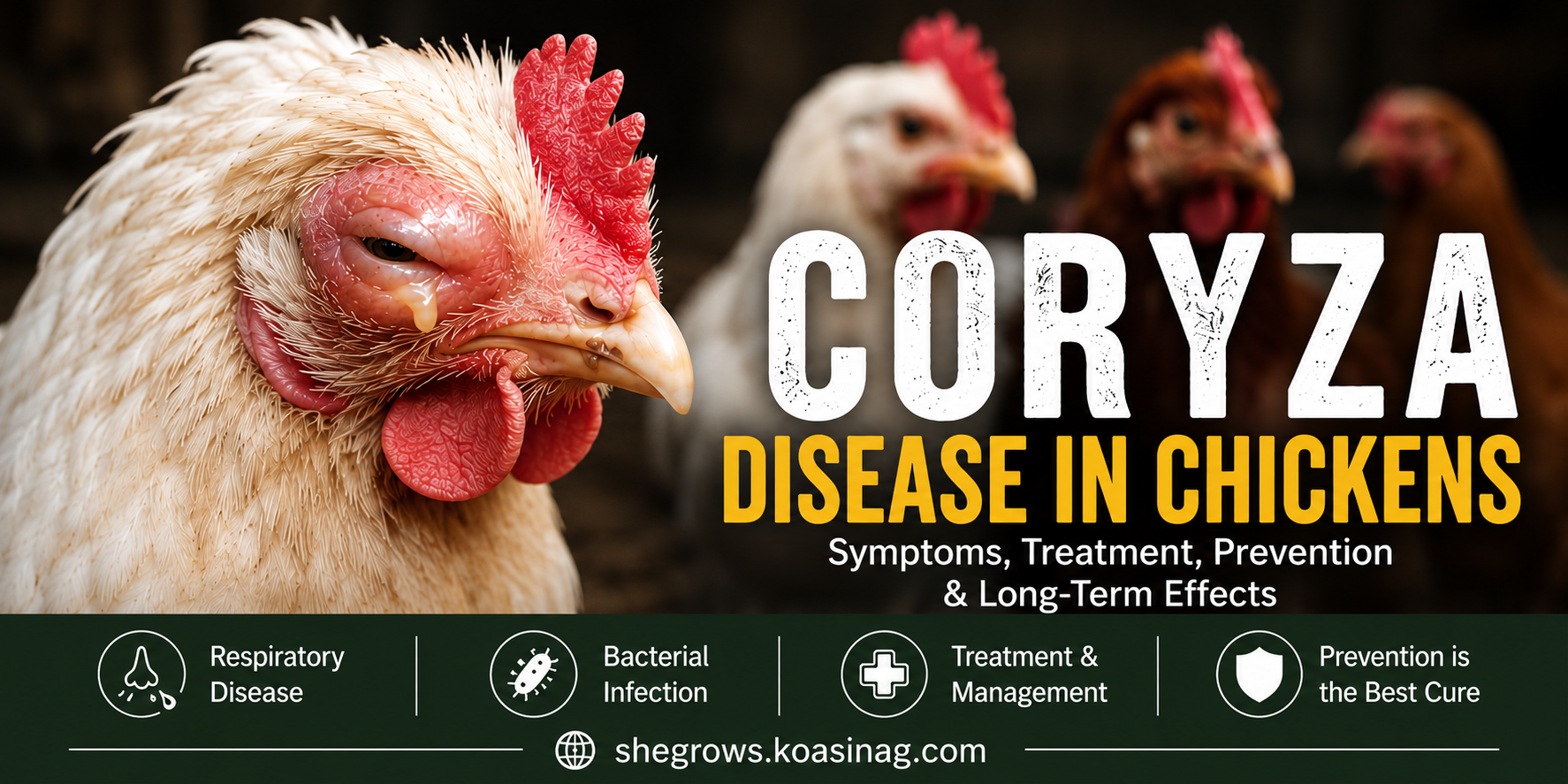
Keeping chickens healthy is one of the most rewarding parts of poultry farming, whether you’re raising a small backyard flock or managing a commercial operation. One of the most common respiratory diseases that affects chickens is Infectious Coryza. If left untreated, it can spread rapidly through a flock, reducing egg production and causing significant economic losses.
In this guide, we’ll explain what Infectious Coryza is, how to identify it, treatment options, management practices, and how to prevent future outbreaks.
What is Infectious Coryza?
Infectious Coryza is a highly contagious bacterial respiratory disease caused by Avibacterium paragallinarum. It mainly affects chickens of all ages but is most commonly seen in laying hens and older birds.
The disease spreads quickly through direct contact with infected birds, contaminated equipment, drinking water, feed, clothing, and even visitors who have been around infected poultry.
Although the disease usually has a low mortality rate, it can severely impact flock productivity and profitability.
How Does Coryza Spread?
The bacteria spread through:
- Direct contact with infected chickens
- Nasal and eye discharge
- Contaminated feed and water
- Equipment and cages
- Farm workers’ boots and clothing
- Newly introduced carrier birds
Birds that recover from the disease often remain lifelong carriers, meaning they can infect healthy birds without showing symptoms.
Symptoms of Infectious Coryza
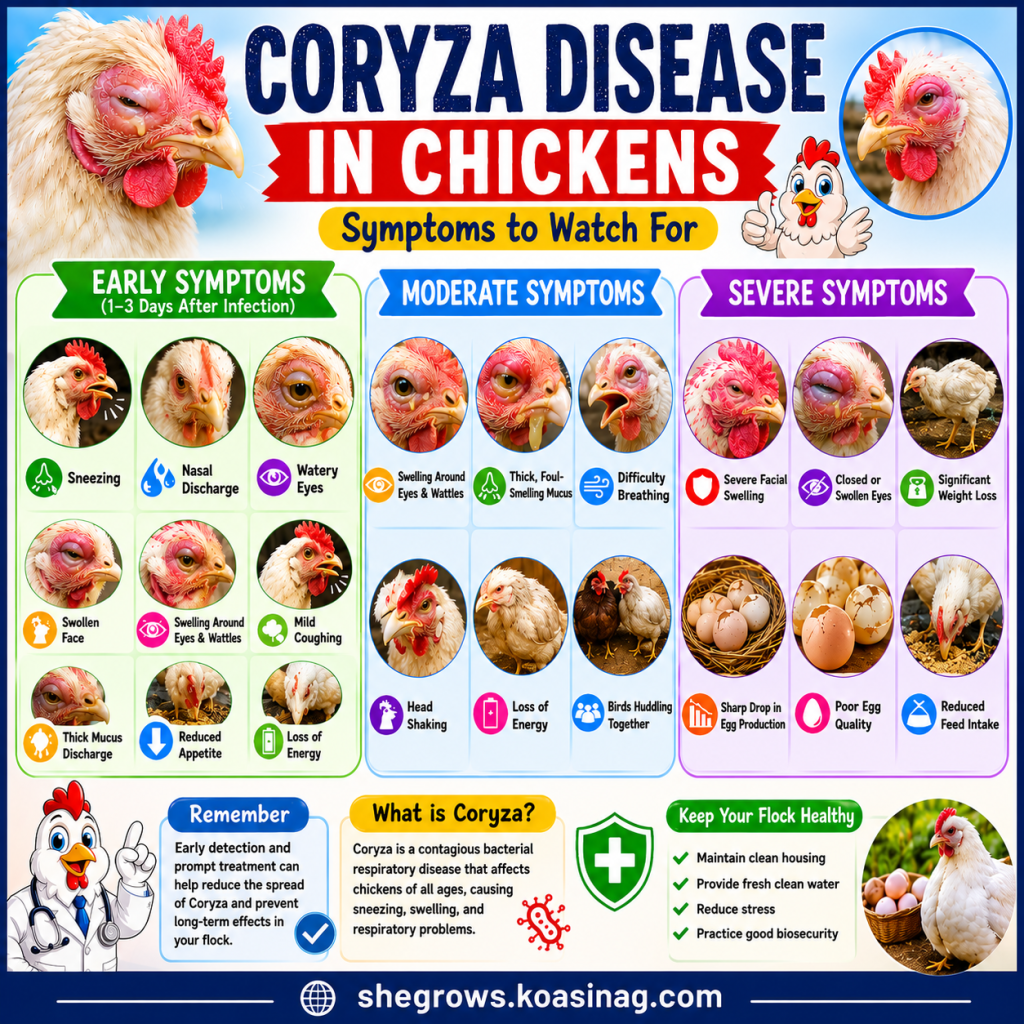
Symptoms usually appear between 1 and 3 days after infection and may include:
Early Symptoms
- Sneezing
- Nasal discharge
- Watery eyes
- Swollen face
- Mild coughing
- Reduced appetite
Moderate Symptoms
- Swelling around the eyes and wattles
- Thick, foul-smelling mucus from the nostrils
- Difficulty breathing
- Head shaking
- Loss of energy
- Birds huddling together
Severe Symptoms
- Severe facial swelling
- Closed or swollen eyes
- Significant weight loss
- Sharp drop in egg production
- Poor egg quality
- Reduced feed intake
Download your free infograghic here:
https://shegrows.koasinag.com/wp-content/uploads/2026/07/She-Grows-Coryza-Disease-Infographic.pdf
What Happens if Coryza is Left Untreated?
Without treatment, the disease can spread rapidly throughout the flock.
Possible complications include:
- Chronic respiratory problems
- Secondary bacterial infections
- Reduced growth in young birds
- Permanent drop in egg production
- Increased susceptibility to other diseases
- Financial losses due to poor productivity
Recovered birds may continue carrying the bacteria for months or even for life.
Diagnosing Coryza
Because the symptoms resemble other respiratory diseases such as:
- Newcastle Disease
- Infectious Bronchitis
- Mycoplasma (CRD)
- Fowl Cholera
a veterinarian should confirm the diagnosis through laboratory testing whenever possible.
Proper diagnosis ensures the correct treatment is used.
Treatment for Infectious Coryza
Since Coryza is caused by bacteria, antibiotics may help reduce the severity of symptoms and control the spread. Commonly used antibiotics include:
- Oxytetracycline
- Doxycycline
- Erythromycin
- Tylosin
- Sulfonamides (where appropriate)
Always follow veterinary advice and observe the required withdrawal periods for eggs and meat.
Supportive Care
Alongside antibiotics:
- Provide clean, fresh water at all times.
- Offer high-quality feed to support recovery.
- Add poultry vitamins and electrolytes to reduce stress.
- Improve ventilation in the coop.
- Keep bedding clean and dry.
Managing an Outbreak
If Coryza is suspected:
1. Isolate Sick Birds
Separate infected birds immediately to reduce spread.
2. Clean and Disinfect
Disinfect:
- Drinkers
- Feeders
- Nest boxes
- Equipment
- Housing
Use an effective poultry-safe disinfectant.
3. Reduce Stress
Stress weakens the immune system.
Avoid:
- Overcrowding
- Sudden feed changes
- Poor ventilation
- Temperature extremes
4. Monitor the Entire Flock
Even healthy-looking birds may become infected.
Watch closely for new symptoms over the following days.
Long-Term Effects of Coryza
Even after recovery, chickens may experience:
- Lower egg production
- Reduced fertility in breeding birds
- Slower weight gain
- Increased vulnerability to respiratory infections
- Lifelong carrier status
For commercial farms, this can result in recurring outbreaks if carrier birds remain in the flock.
Can Humans Catch Coryza?
No.
Infectious Coryza is not considered a zoonotic disease, meaning it does not infect humans.
However, good hygiene practices should always be followed when handling sick poultry.
Preventing Coryza
Prevention is far easier than treating an outbreak.
Practice Good Biosecurity
- Limit visitors to poultry areas.
- Disinfect boots and equipment.
- Wash hands before and after handling birds.
- Quarantine new birds for at least 2–4 weeks before introducing them to the flock.
Keep Housing Clean
Regularly:
- Remove old litter
- Clean feeders and drinkers
- Improve airflow
- Prevent overcrowding
Vaccination
In areas where Coryza is common, vaccination may be recommended. Vaccination does not guarantee complete protection but can significantly reduce the severity of disease and help prevent major outbreaks.
Consult your local veterinarian or poultry extension service for advice on vaccination programs suitable for your region.
Can Chickens Recover?
Yes.
Many chickens recover fully with prompt treatment and supportive care.
However, recovered birds often remain carriers of the bacteria. In commercial operations, some farmers choose to remove carrier birds to prevent future outbreaks.
Frequently Asked Questions
Is Coryza fatal?
The disease usually has a low mortality rate, but deaths can occur when birds develop secondary infections or receive delayed treatment.
Can eggs from infected chickens be eaten?
In most cases, eggs are safe to consume once the appropriate antibiotic withdrawal period has passed. Always follow the instructions provided with any medication and local food safety regulations.
How long does Coryza last?
Clinical signs often improve within one to two weeks with appropriate treatment, although birds may continue to carry the bacteria after they recover.
Can Coryza come back?
Yes. Recovered birds may carry the bacteria without showing signs of illness and can trigger future outbreaks, particularly when birds are stressed or new susceptible birds are introduced.
Final Thoughts
Infectious Coryza is one of the most common bacterial respiratory diseases affecting chickens. While it spreads quickly, early recognition, prompt treatment, strict biosecurity, and good flock management can greatly reduce its impact.
Healthy housing, proper nutrition, routine cleaning, and careful introduction of new birds remain the best defenses against this disease. By staying vigilant and acting quickly when symptoms appear, poultry keepers can protect their flocks and maintain productivity throughout the year.

